Who Is Responsible for a Blocked Drain?
Who Is Responsible for Clearing a Blocked Drain?
When a drain becomes blocked, working out who needs to deal with it isn't always obvious. Responsibility can depend on where the blockage is located, whether the pipe serves only your property or several properties, and whether it forms part of the public sewer network. Understanding who is responsible can help ensure the blockage is dealt with quickly and correctly.
The first step is therefore establishing where the blockage is and which part of the drainage system it affects.
Are Homeowners Responsible for Blocked Drains?
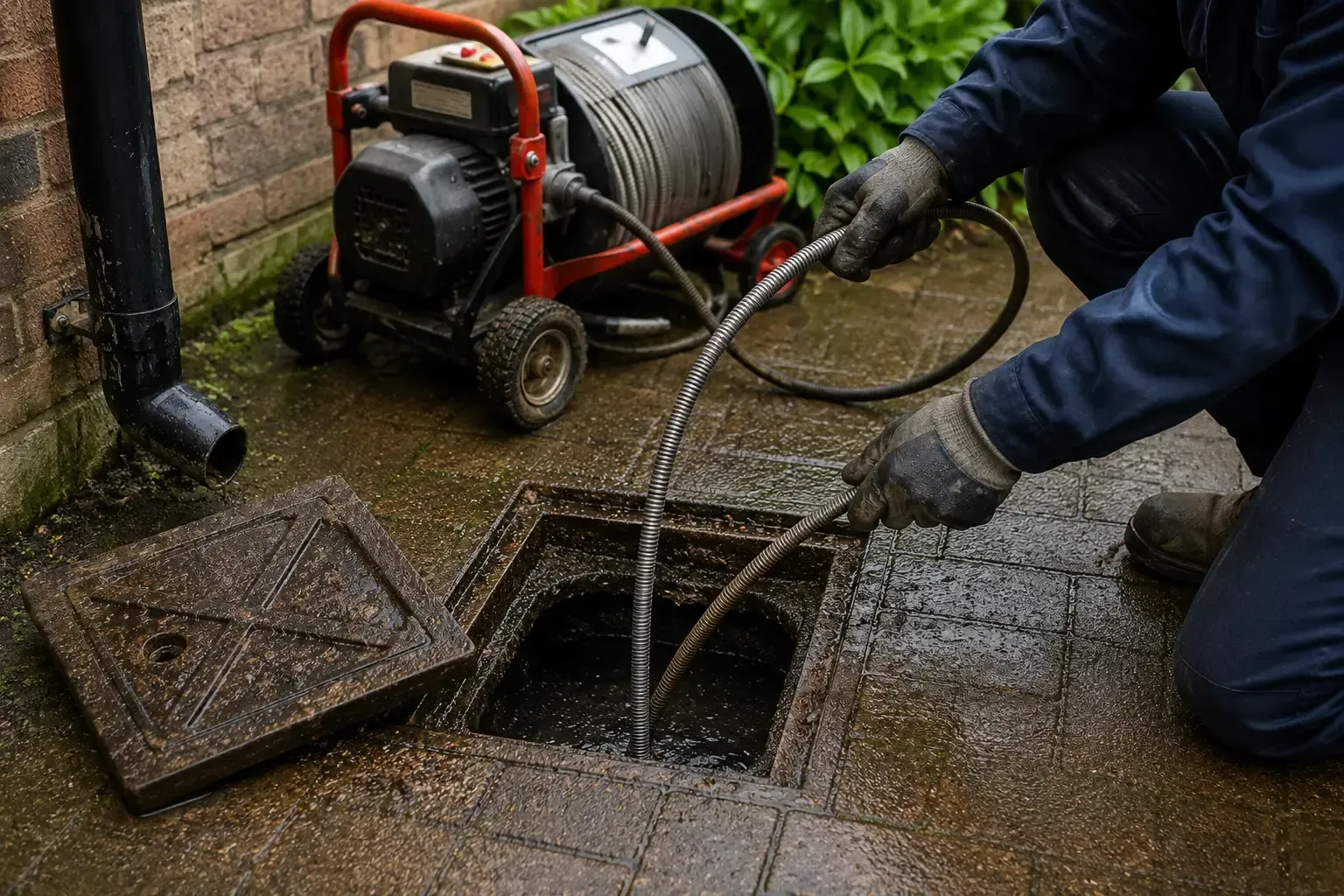
Generally, a homeowner is responsible for private drainage serving their own property before it connects to shared or public infrastructure. That means if the blockage is within pipework serving only your home, arranging and paying for clearance will usually fall to you.
However, drainage layouts vary considerably, particularly between older and newer properties, so don't assume that the nearest visible drain necessarily identifies who owns the affected pipe.
What Is the Difference Between a Drain and a Sewer?
A private drain generally carries wastewater from a single property. A sewer typically carries wastewater from more than one property. This distinction becomes important because responsibility can change once your private drainage connects with shared infrastructure.
What About Shared Drains?
If the affected pipe serves several properties, responsibility may lie with the relevant sewerage company rather than an individual homeowner.
If your neighbours are experiencing similar drainage problems at the same time, that can be an indication that the problem lies within shared infrastructure. It doesn't prove it, though. Establishing the location of the obstruction is still important.
Who Is Responsible for a Blocked Public Sewer?
Public sewers are generally the responsibility of the relevant water and sewerage company. If the blockage is confirmed to be within the public sewer network, it should normally be reported to that company rather than treated as a private drainage repair.
Who Is Responsible for Blocked Drains in a Rented Property?
This can depend on why the drain became blocked as well as the tenancy arrangements.
A landlord may be responsible where the problem results from the condition, installation or maintenance of the property's drainage system. However, if a blockage has been caused by inappropriate items being put down a drain or toilet, responsibility for the resulting costs can potentially be different.
Tenants should report significant drainage problems to their landlord or managing agent rather than commissioning major repair work without authorisation.
How Do You Find Out Where the Blockage Is?
Sometimes the symptoms provide clues. If only one sink is affected, the obstruction may be local to that fixture. If every toilet and drain within the property is affected, the problem could be further along the system. If several neighbouring properties are experiencing problems, shared infrastructure becomes more likely.
Where the cause or location isn't obvious, professional drainage investigation can establish what's happening.
Can a CCTV Drain Survey Identify the Problem?
Yes. A CCTV drain survey can inspect inside accessible drainage pipes to identify blockages and defects and help establish where a problem is located.
This is particularly useful where blockages repeatedly return or there is uncertainty about the condition of the drainage system.
What Should I Do If I'm Not Sure Who Is Responsible?
Don't start excavating anything based on guesswork. First establish:
- Which fixtures are affected.
- Whether neighbouring properties have problems.
- Whether the affected drainage serves only your property.
- Whether the blockage can be located.
If it appears to be within your private drainage system, a drainage specialist can investigate and clear it. If evidence indicates the problem lies within a public sewer, contact the appropriate sewerage company.
Need Help Locating a Drainage Blockage?
Bosworth Drainage can investigate blocked drains and identify problems within private drainage systems using professional clearance and CCTV inspection equipment.
If you're unsure where a blockage is located, identifying the problem is the sensible first step before deciding what work is required.
Frequently Asked Questions
Am I responsible for the drains outside my house?
Potentially. Being outside doesn't automatically mean a drain is public. A drainage pipe can still be private if it serves your property alone. Responsibility depends on the drainage arrangement and where it connects with shared infrastructure.
Who pays if a shared drain is blocked?
If the affected pipe forms part of the public sewer network, responsibility may sit with the relevant sewerage company. If it remains private drainage, responsibility can differ. Establishing the location and ownership of the affected section is therefore important.
What if my neighbour's drain is blocked too?
Several neighbouring properties experiencing drainage problems simultaneously can indicate an issue within shared drainage or the sewer network. Check with the relevant sewerage company if a public sewer problem is suspected.
Can Bosworth tell me where the blockage is?
Professional drainage investigation can help establish the location and cause of a blockage within accessible private drainage. CCTV equipment can also be used where the internal condition of the pipe needs to be examined.
Recent Posts