How to Clear a Blocked Drain: Complete Guide
How to Clear a Blocked Drain: Complete Guide
A blocked drain can start with something relatively minor, such as water taking longer than usual to disappear, but it can quickly develop into a much bigger problem. Bad smells, gurgling noises, overflowing drains and wastewater backing up into sinks, showers or toilets can all indicate that something is preventing water from flowing freely through your drainage system.
Some simple drain blockages can be cleared safely at home. Others may be deeper within the drainage system or caused by problems such as compacted debris, tree root intrusion or damaged pipework, where professional drainage equipment is required.
In this guide, we'll explain how to clear a blocked drain, what commonly causes drainage blockages and how to recognise when it's time to stop trying DIY methods and call a drainage specialist.
How Do You Know If a Drain Is Blocked?
Drainage problems don't always begin with a completely blocked pipe. In many cases, you'll notice the drainage system gradually becoming less effective.
- Water draining slowly from sinks, baths or showers
- Water rising before gradually draining away
- Gurgling or bubbling noises from plugholes
- Unpleasant smells coming from drains
- Water appearing around an outside drain
- Toilets taking longer to empty after flushing
- Water backing up through another fixture
- Sewage or wastewater overflowing from a drain
One slow-draining sink may indicate a localised blockage close to that particular fixture. If several sinks, toilets or drains around the property are experiencing problems simultaneously, the obstruction may be further along the drainage system.
This distinction matters because a simple local blockage may be suitable for DIY treatment, whereas a deeper drainage blockage usually requires specialist equipment.
What Causes Blocked Drains?
There isn't one single cause of blocked drains. What is causing the obstruction often determines how it needs to be removed.
Fat, Oil and Grease
Cooking fats and oils can enter a drain as liquids but cool and solidify inside the pipework. Over time, additional food waste and debris can stick to this material, gradually reducing the diameter of the pipe. Eventually, water may struggle to pass through at all.
Food Waste
Even relatively small amounts of food entering a kitchen sink can accumulate inside drainage pipes. Coffee grounds, rice, pasta and other food waste should generally be disposed of in the bin rather than washed down the sink.
Hair and Soap
Bathroom drains commonly become blocked by a combination of hair, soap residue and other products. This material can accumulate around the waste pipe and gradually restrict the flow of water from baths, showers and bathroom sinks.
Wet Wipes and Sanitary Products
Toilet paper is designed to break down after flushing. Many other products aren't. Wet wipes, sanitary products, cotton buds and similar items can remain intact within the drainage system and contribute to significant blockages.
Leaves, Soil and Debris
Outside drains are exposed to a completely different range of potential obstructions. Leaves, soil, mud and other garden debris can enter drainage channels and gullies and eventually prevent water from flowing properly. For a detailed walkthrough, see our guide to How to Unblock an Outside Drain.
Tree Roots
Tree roots naturally seek sources of moisture and can enter drainage pipes through small cracks, damaged joints or other defects. Once inside, the roots can continue growing and trap waste passing through the pipe. Simply removing the immediate obstruction may therefore not solve the underlying problem.
How to Clear a Blocked Drain Yourself
The appropriate method depends on where the blockage is located and what's causing it. If the problem appears relatively minor, there are several things you can try before calling a drainage company.
1. Remove Any Visible Debris
Start with the simplest explanation. If you can safely access the affected drain, check whether anything obvious is preventing water from escaping. For sinks and showers, this could be accumulated hair or debris around the plughole. Outside, leaves and other material may have accumulated around a drain cover or gully.
Always wear suitable protective gloves when handling material from a drain and avoid direct contact with wastewater.
2. Try Hot Water
Hot water can sometimes help with relatively minor accumulations of soap or grease. However, this isn't a universal drain-unblocking method. A significant obstruction won't simply disappear because hot water has been poured onto it, and repeatedly pouring boiling water into certain types of pipework isn't something we'd recommend.
If water isn't draining at all, continually adding more water can also make the situation worse by increasing the amount that could potentially overflow.
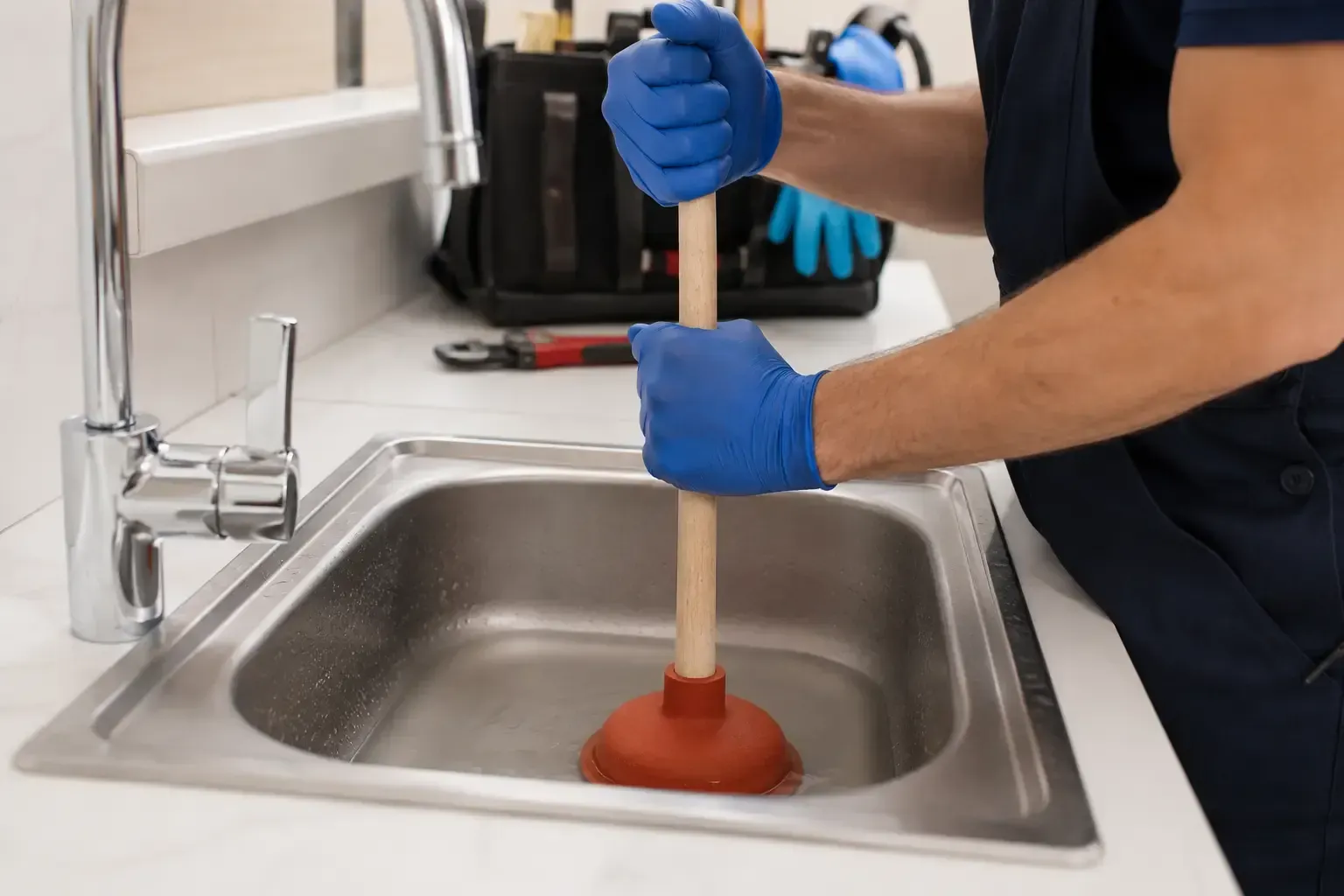
3. Use a Plunger
A plunger can be effective when the blockage is relatively close to the affected fixture. The plunger needs to form a good seal around the opening. Repeated plunging creates changes in pressure that may loosen or move the obstruction.
If the blockage clears, run water afterwards and check that it now drains normally. If the water remains slow or immediately backs up again, there may still be material restricting the pipe.
4. Check Accessible Traps
If the problem is isolated to a single sink, the blockage may be within the trap beneath it. Food, grease, hair and other debris can accumulate here.
If you're comfortable removing the trap, place a container underneath first to catch any water and debris. Once cleaned, ensure everything is correctly refitted and check carefully for leaks. If you're unsure about dismantling plumbing, leave this step to somebody suitably experienced.
5. Drain Rods
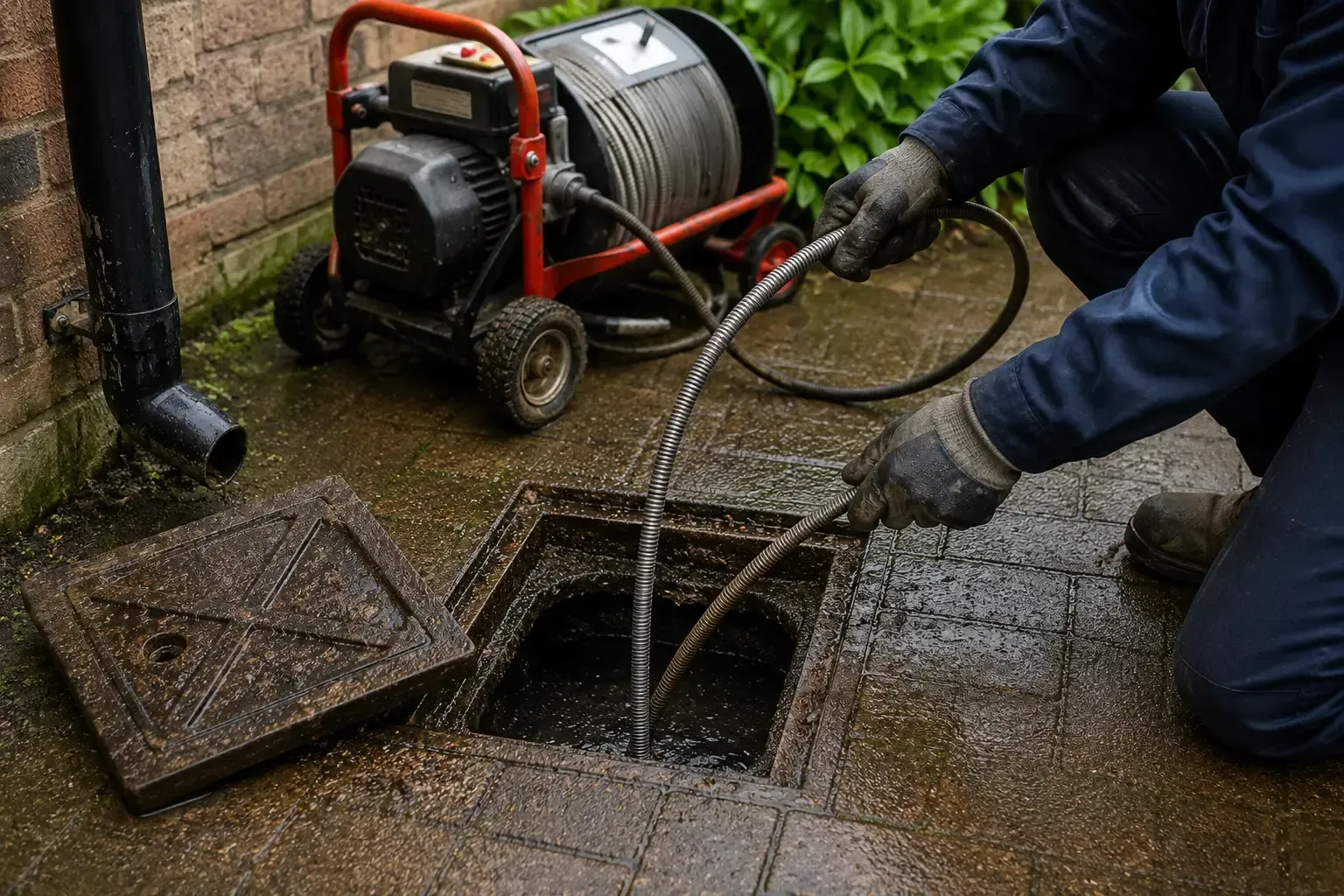
Drain rods can be used for some blockages within accessible drainage pipes. However, they need to be used correctly. Forcing rods through a drainage system without understanding the pipe layout can potentially cause problems, particularly where the drainage system is damaged or the obstruction is particularly stubborn.
If you've reached the point where significant force is required, it's usually sensible to stop. Professional drainage engineers have equipment capable of both locating and clearing obstructions without relying on guesswork.
Should You Use Chemical Drain Cleaners?
Chemical drain cleaners are readily available, but that doesn't mean they're the best solution for every blocked drain. They may have some effect on certain small accumulations of organic material, but they're unlikely to resolve problems caused by objects, tree roots, damaged pipework or substantial obstructions further along the drainage system.
There is also another practical issue. If chemical cleaner doesn't remove the blockage, you can be left with standing water containing potentially hazardous chemicals. That makes subsequent work on the drain more difficult and potentially dangerous. For that reason, we'd avoid repeatedly pouring different chemical products into a drain that isn't clearing.
What If the Outside Drain Is Blocked?
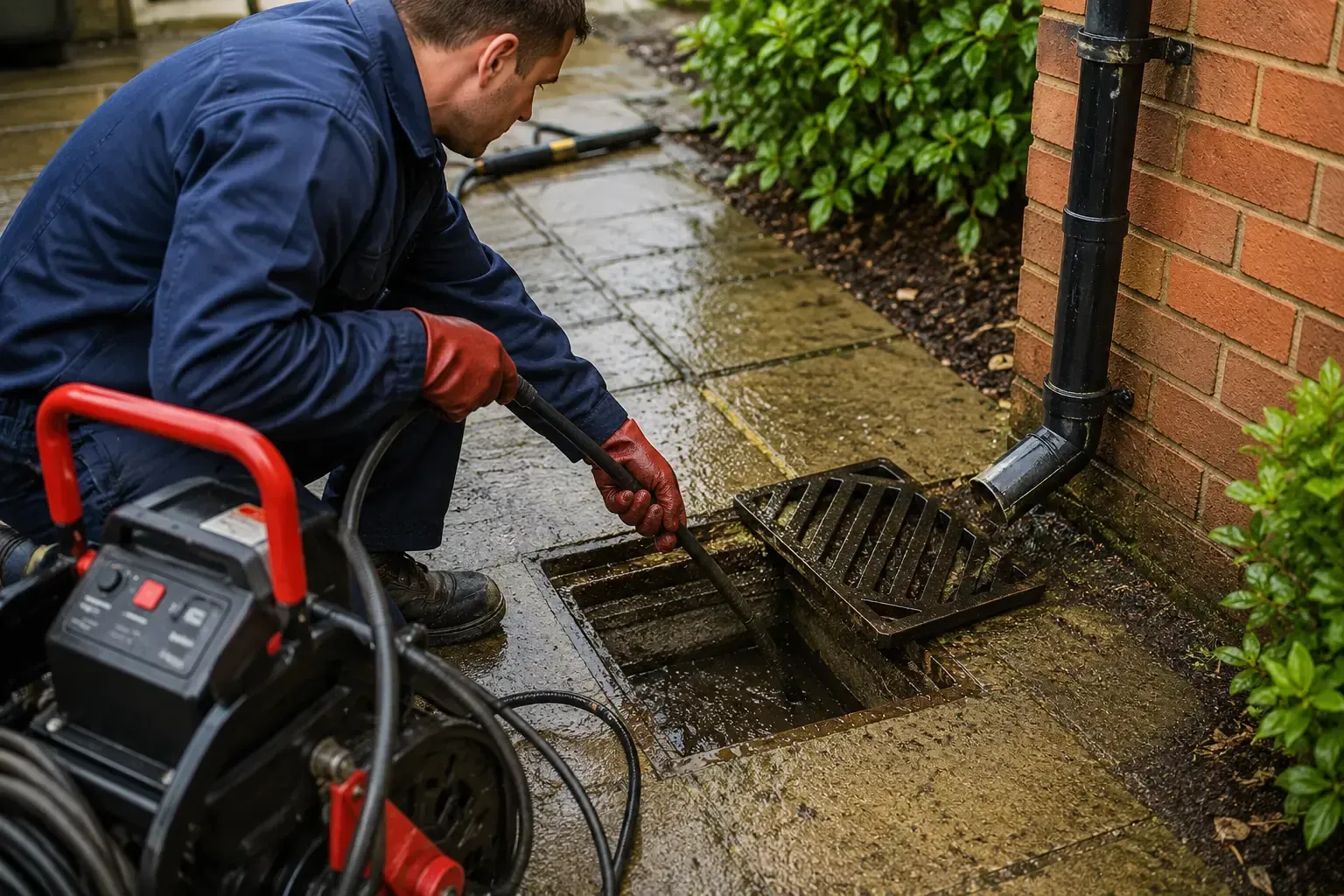
An outside drain that's full of standing water, mud, leaves or sewage needs slightly different consideration. First establish whether debris immediately around the drain is responsible. If removing obvious material doesn't allow the water level to fall, the obstruction may be inside the drainage pipe itself.
Don't repeatedly flush toilets or run taps to 'test' a completely blocked outside drain. If wastewater has nowhere to go, you're simply adding more water to the system.
Read our full guide: How to Unblock an Outside Drain.
What If the Drain Keeps Blocking?
If you've cleared what appears to be a blockage only for the same problem to return, there may be an underlying reason.
- A partial obstruction that wasn't completely removed
- Fat or scale reducing the internal diameter of the pipe
- Tree root intrusion
- A displaced pipe joint
- Cracked drainage pipes
- A collapsed section of drain
- An incorrectly installed drainage system
Repeatedly clearing the immediate obstruction doesn't necessarily fix any of those problems. A CCTV drain survey allows the inside of the drainage system to be inspected so the actual cause can be identified.
When Is Drain Jetting Needed?
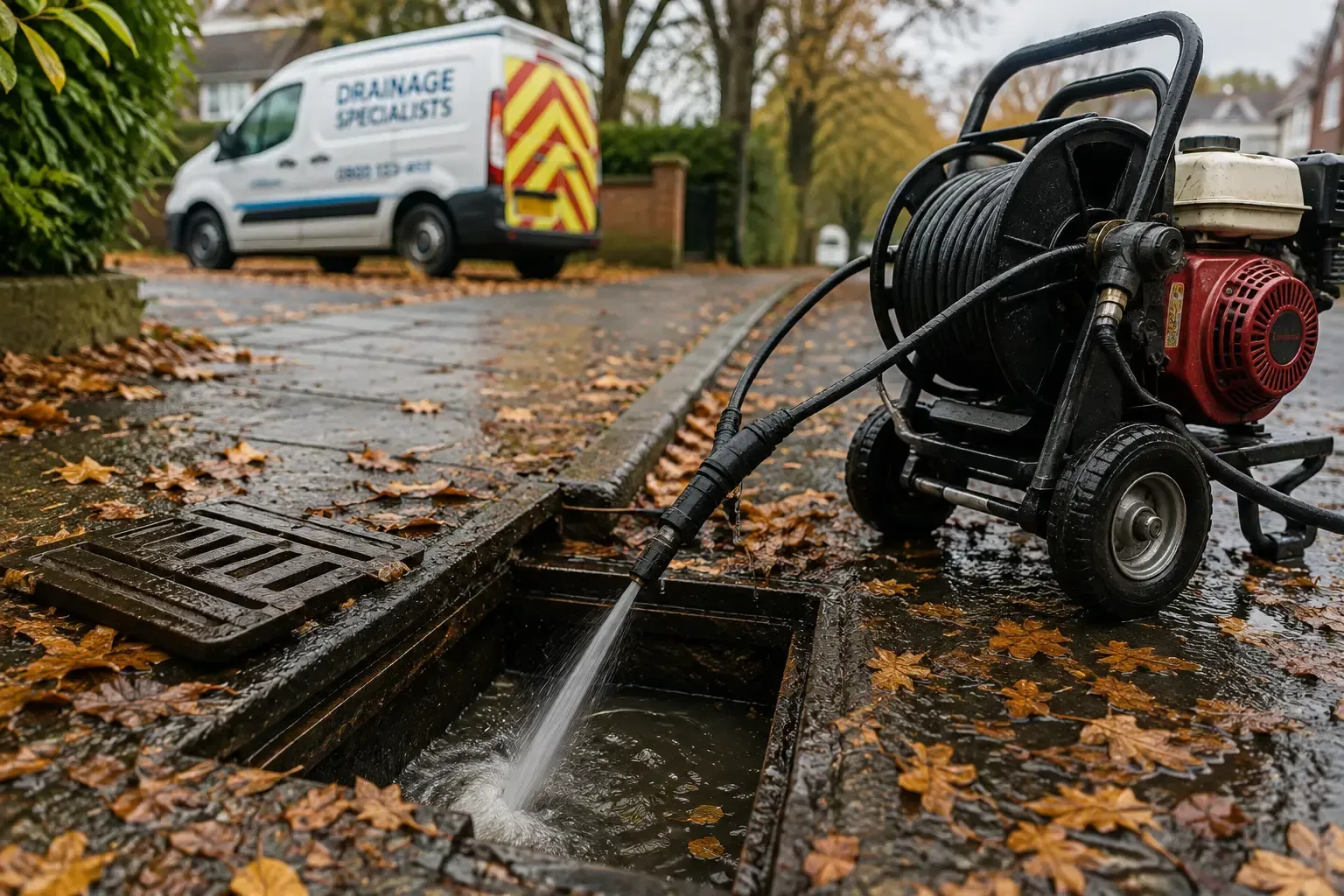
Some blockages are too substantial to remove using basic household methods. Professional high-pressure water jetting can be used to break down and remove accumulated material from drainage pipes.
Rather than simply creating a small opening through the obstruction, jetting can help remove deposits from within the pipe and restore water flow. It can be particularly useful where grease, sludge and other accumulated material are contributing to the problem.
Could My Drain Have Collapsed?
A collapsed or seriously damaged drain can sometimes produce symptoms similar to an ordinary blockage.
- Blockages repeatedly returning
- Several drains being affected
- Persistent foul smells
- Unexplained damp areas
- Ground movement or subsidence around drainage routes
- Drainage problems that cannot be permanently resolved by cleaning
These symptoms don't automatically mean you've got a collapsed drain, but persistent problems warrant further investigation. A CCTV inspection can help identify cracks, displaced joints, root intrusion and collapsed sections without immediately excavating the drainage system.
Who Is Responsible for a Blocked Drain?
Responsibility depends on where the blockage is located and how the drainage system is shared. A blockage within drainage pipework serving only your property will often be the property owner's responsibility. Once drainage becomes shared or forms part of the public sewer network, responsibility can be different.
Read our full guide: Who Is Responsible for a Blocked Drain?
When Should You Call a Drainage Company?
There's nothing wrong with trying a sensible DIY solution for a minor blockage. But there comes a point where continuing can cost more time and potentially create a bigger problem.
- The drain is completely blocked
- Sewage is backing up
- Multiple drains are affected
- An outside drain is overflowing
- The blockage keeps returning
- Drain rods haven't resolved the problem
- You suspect tree roots or structural damage
- You can't determine where the blockage is
- There's a risk of wastewater entering your property
Professional drainage engineers can use equipment such as drain rods, high-pressure water jetting and CCTV inspection systems to determine what's happening and choose an appropriate solution.
Blocked Drain? Bosworth
Drainage Can Help
If you've tried the basic steps above and your drain remains blocked, Bosworth Drainage can investigate and clear the problem professionally.
Our drainage services include blockage clearance, drain jetting, CCTV drain surveys and drainage repairs, allowing us to deal with both straightforward obstructions and more complicated underlying problems.
We work across Nottinghamshire, Derbyshire and surrounding areas, providing professional drainage services for homes and businesses.
Frequently Asked Questions
What is the easiest way to clear a blocked drain?
For a minor blockage, start by removing any visible debris and checking whether the obstruction is close to the affected sink, shower or drain. A plunger can sometimes dislodge localised blockages. If the drain is completely blocked, several fixtures are affected or the problem repeatedly returns, the obstruction may be deeper in the drainage system and professional clearance may be required.
Can a blocked drain clear itself?
A partially blocked drain may sometimes appear to improve as water slowly passes the obstruction, but that doesn't necessarily mean the blockage has disappeared. Material can remain inside the pipe and continue collecting additional waste until the drain blocks again. Repeated slow drainage should therefore be investigated rather than relying on the problem resolving itself.
Why does my drain keep getting blocked?
Recurring blockages can indicate that the original obstruction wasn't completely removed. However, they can also be caused by grease deposits, tree roots, damaged pipework, displaced joints or a collapsed drain. If the same drain repeatedly blocks after being cleared, a CCTV drain survey can help identify the underlying cause.
Can I unblock a drain with boiling water?
Hot water may help loosen small amounts of grease or soap residue, but it won't resolve every blockage and isn't suitable for every drainage system. Avoid repeatedly adding boiling water to a drain that isn't emptying, particularly if you're unsure about the pipe material or condition. Significant blockages normally require another method of clearance.
How do professionals clear blocked drains?
The appropriate method depends on the cause and location of the obstruction. Drainage engineers may use drain rods or high-pressure water jetting to clear the pipe. Where the cause isn't obvious or blockages repeatedly return, CCTV drainage equipment can be used to inspect the inside of the pipe and identify problems such as root intrusion, damaged joints or collapsed sections.
Recent Posts