How to Unblock an Outside Drain
How to Clear a Blocked Outside Drain Safely
A blocked outside drain can quickly become more than an inconvenience. Standing wastewater, unpleasant smells, overflowing gullies or sewage appearing around a drain are all signs that water isn't moving through the drainage system properly.
Some outside drain blockages are caused by leaves, mud or debris close to the surface and may be relatively straightforward to remove. Others are located deeper underground and can require professional drain jetting or investigation.
This guide explains what you can safely check yourself, how to unblock a simple outside drain and when it's better to call a drainage specialist.
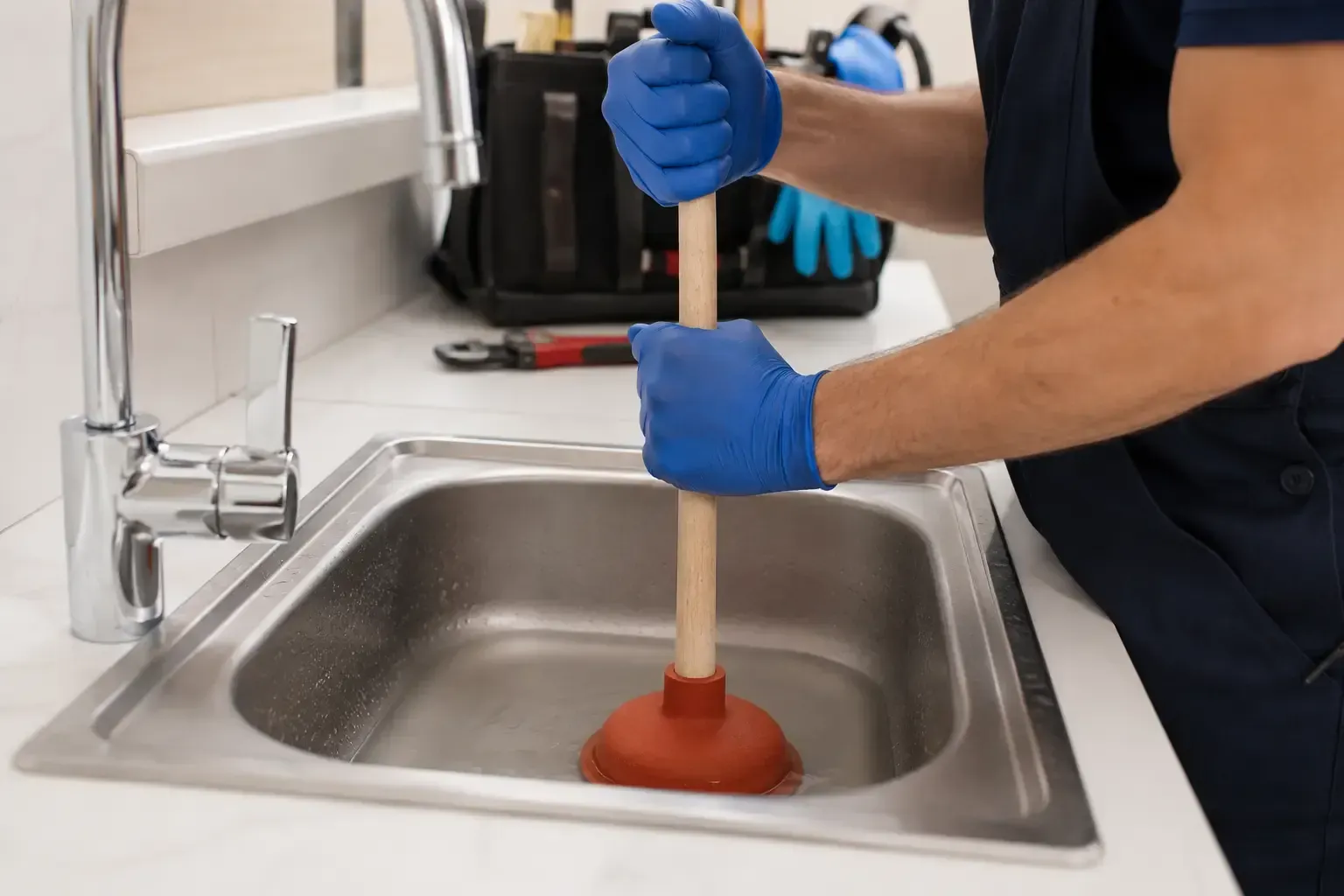
How Can You Tell If an Outside Drain Is Blocked?
The most obvious sign is water remaining inside or overflowing from the drain. You may also notice:
- Water draining much more slowly than normal
- Wastewater rising when a toilet is flushed
- Gurgling from nearby drains
- Strong sewage smells
- Water pooling around the drain
- Toilet or sink problems elsewhere in the property
- Sewage appearing around an outside gully
If several fixtures are affected simultaneously, the blockage may be deeper within the drainage system rather than immediately beneath the outside drain.
What Causes an Outside Drain to Become Blocked?
Leaves and Garden Debris
Leaves, twigs and other material can collect around drain covers and gullies. Once wet, this debris can compact into a surprisingly effective obstruction.
Mud and Soil
Heavy rainfall, gardening and surface-water runoff can carry soil into outside drains. Small quantities may wash through, but repeated accumulation can eventually restrict the pipe.
Fat, Oil and Grease
Kitchen wastewater can carry grease into the drainage system. As it cools, grease can solidify inside pipes and collect additional waste.
Wet Wipes and Other Items
Items flushed down toilets can travel further into the drainage system before becoming lodged. Wet wipes are particularly problematic because they don't break down in the same way as toilet paper.
Tree Roots
Roots can enter through cracks or defective pipe joints and continue growing inside the drainage system. A blockage caused by roots is unlikely to be permanently resolved using ordinary DIY methods.
Damaged Drainage Pipes
Cracked, displaced or collapsed pipes can restrict wastewater and trap material. Recurring outside drain blockages can therefore indicate a structural problem rather than simply too much waste.
How to Unblock an Outside Drain Yourself
1. Put on Protective Equipment
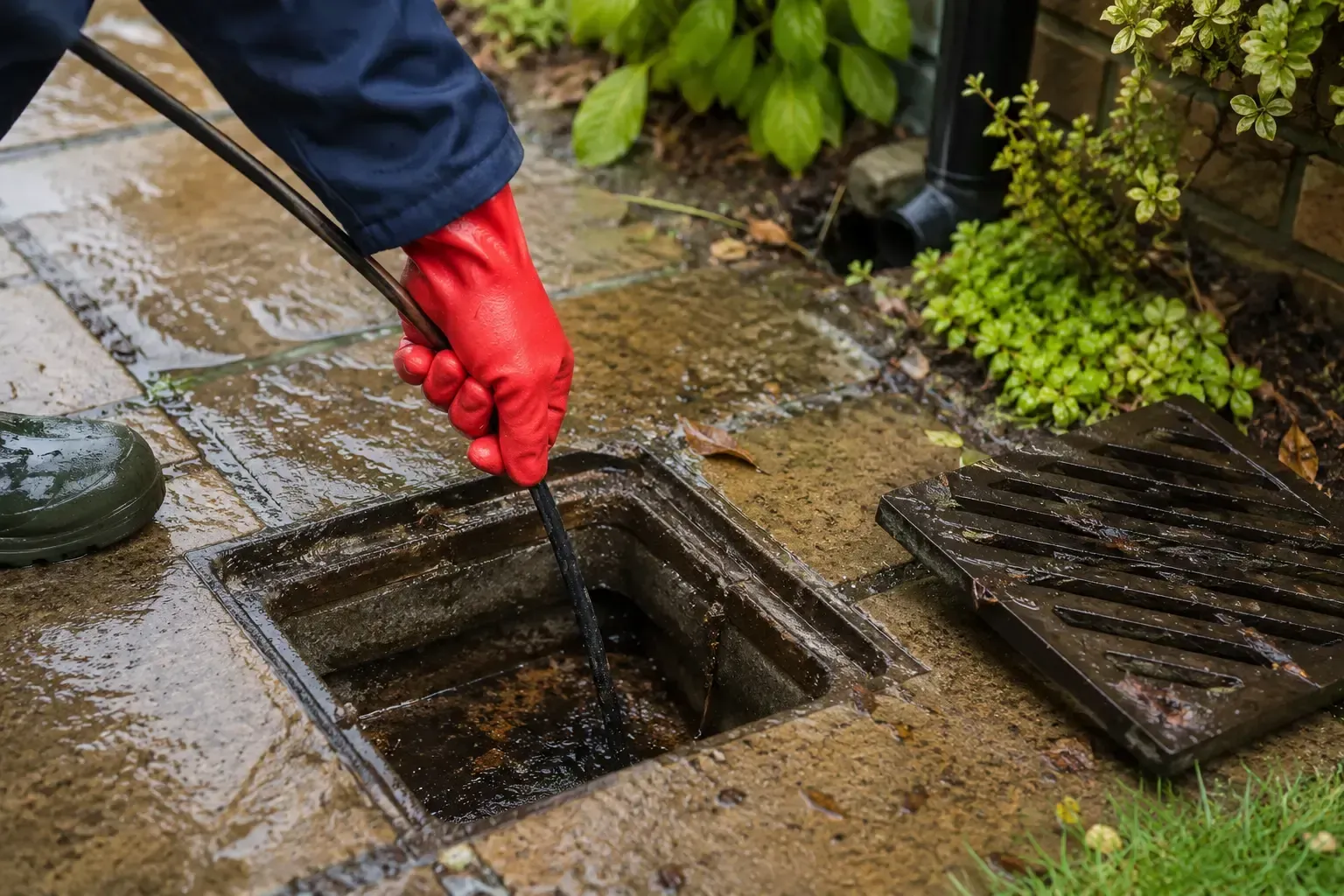
Drain water can contain harmful bacteria. Wear waterproof gloves and suitable clothing and avoid direct contact with wastewater. Wash thoroughly afterwards.
2. Remove the Drain Cover
If it can be safely removed, lift the drain cover to inspect the chamber below. Never enter a manhole or enclosed drainage chamber.
3. Remove Visible Debris
If leaves, mud or other material are sitting immediately inside the drain, carefully remove what you can reach safely. You may find that water begins flowing again as soon as the surface obstruction is removed.
4. Check the Water Level
If the chamber remains full after accessible debris has been removed, the blockage is probably further along the pipe. Avoid continually running taps or flushing toilets simply to test it. If the system is blocked, you're adding more wastewater with nowhere to go.
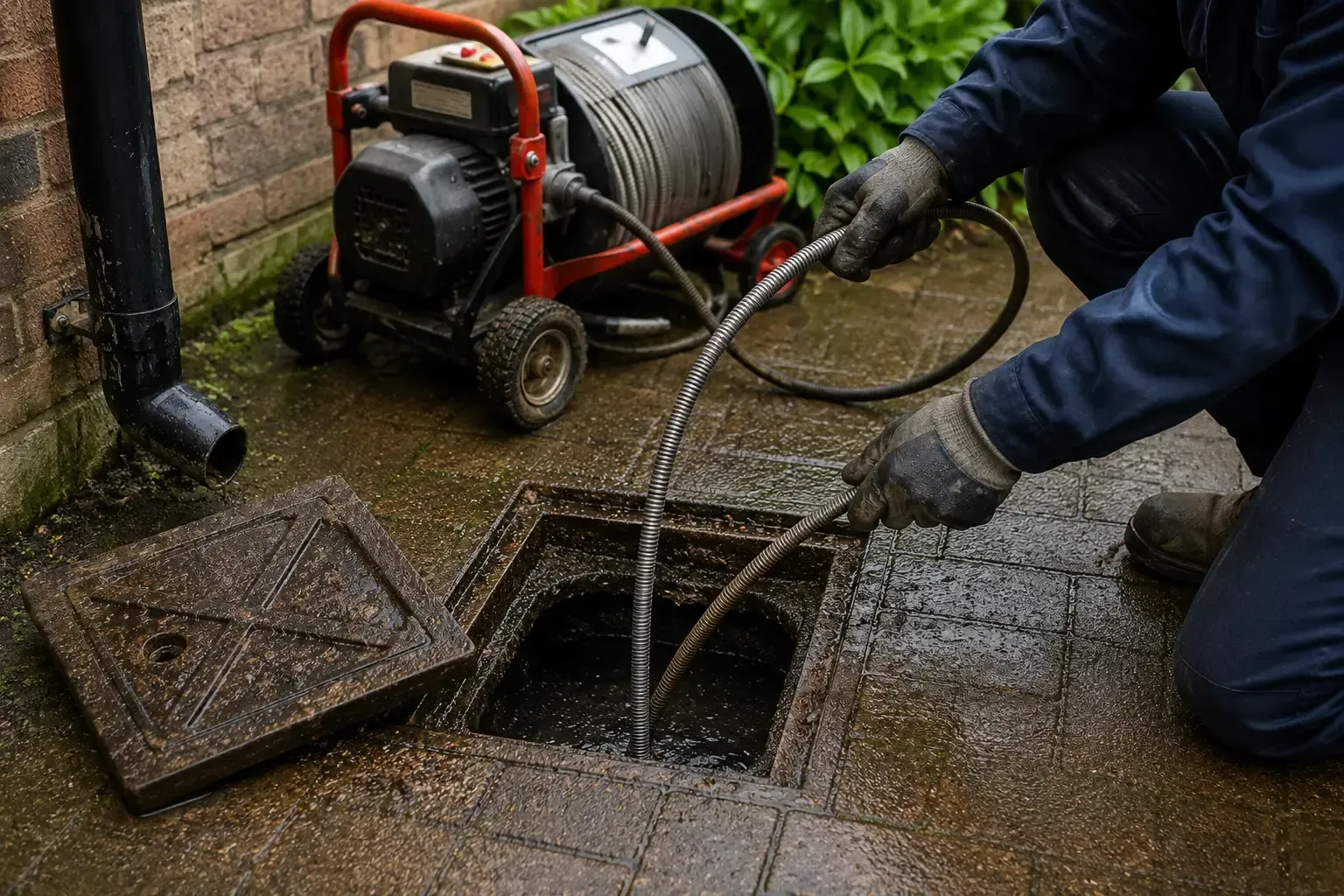
5. Consider Drain Rods
Drain rods can sometimes clear straightforward obstructions. However, they should never require excessive force. Incorrect use can potentially damage pipework or result in rods becoming stuck or disconnected. If you're uncertain about the drainage layout or the obstruction won't move, stop.
Can Boiling Water Unblock an Outside Drain?
It depends entirely on what's causing the blockage. Hot water may help with relatively minor grease deposits, but it won't remove mud, roots, solid objects or damaged pipework.
If the drain is already full, adding litres of hot water simply increases the amount of standing water. For a substantial outside drain blockage, identifying and physically removing the obstruction is far more important than repeatedly pouring products into the drain.
What If Sewage Is Coming Out of the Outside Drain?
This should be treated more seriously. Stop unnecessary water use inside the property, particularly washing machines, dishwashers, baths and repeated toilet flushing.
The sewage indicates wastewater isn't escaping normally. Avoid contact with contaminated water and keep children and pets away from the affected area. Professional drainage assistance is advisable, particularly if the drain continues overflowing.
Why Does My Outside Drain Keep Blocking?
If the same drain repeatedly blocks, simply clearing it again may not solve the real problem.
- Tree root intrusion
- Damaged pipework
- Displaced joints
- A partial obstruction remaining in the pipe
- Significant grease or scale accumulation
- A collapsed drain
This is where a CCTV drain survey can be particularly useful. A drainage camera allows the inside of the pipe to be inspected and the cause identified rather than repeatedly treating the symptom.
When Should You Call a Drainage Company?
Call a professional if:
- The drain is completely blocked
- Sewage is overflowing
- Several drains are affected
- Drain rods haven't cleared it
- The blockage repeatedly returns
- You suspect roots or damaged pipework
- You can't identify where the obstruction is
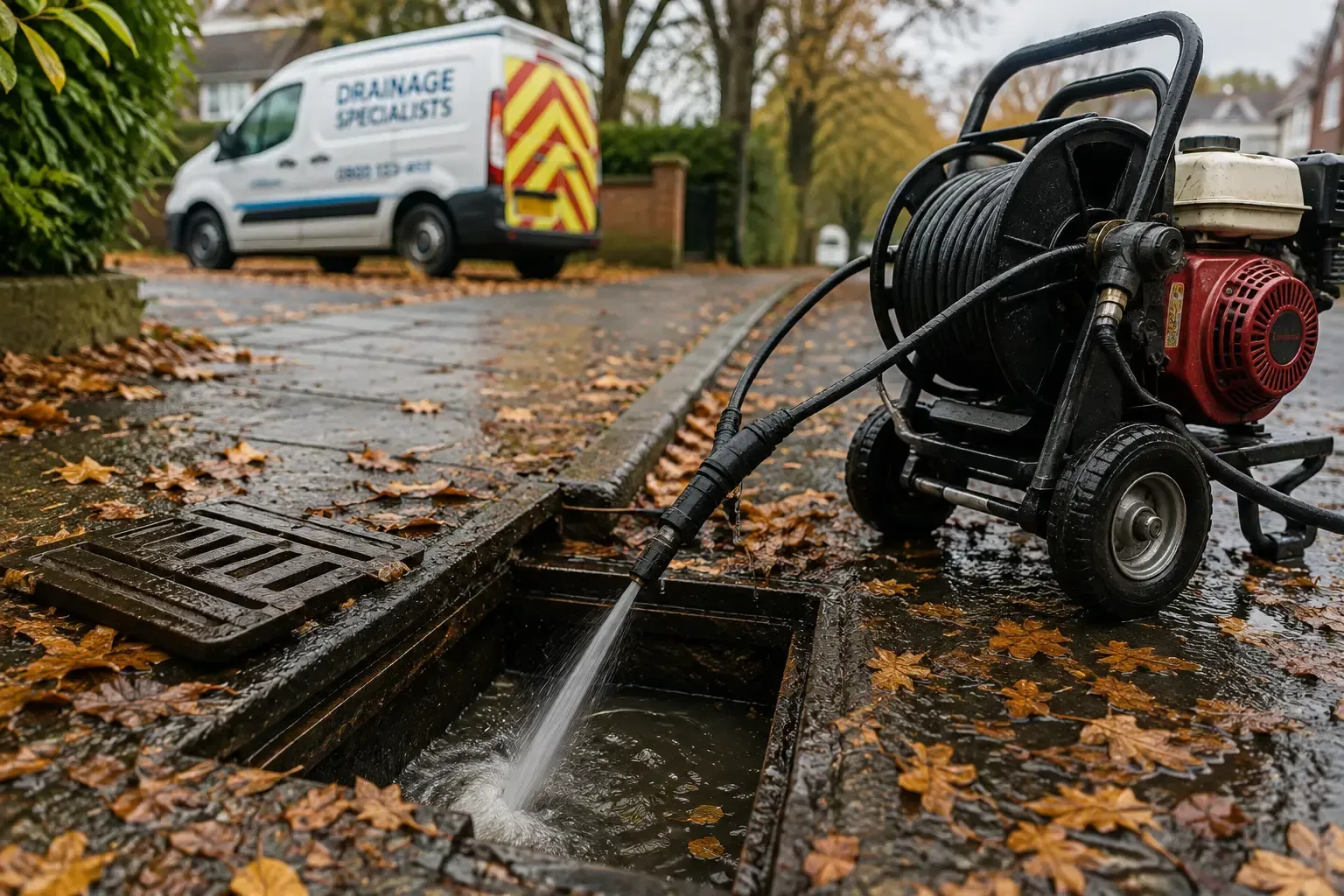
Professional equipment such as high-pressure drain jetting can remove obstructions that basic household methods cannot.
Need Help With a Blocked
Outside Drain?
Bosworth Drainage provides professional drain unblocking, drain jetting, CCTV drain surveys and drainage repairs across Nottinghamshire, Derbyshire and surrounding areas.
If your outside drain remains blocked or sewage is beginning to back up, we can investigate the cause and recommend an appropriate solution.
Frequently Asked Questions
Can I unblock an outside drain myself?
Minor blockages caused by accessible leaves or debris can sometimes be cleared safely yourself. If the obstruction is deeper inside the drainage pipe, repeatedly returns or is causing sewage to overflow, professional drainage equipment may be required.
Why is my outside drain full of water?
Standing water usually indicates that water isn't escaping through the drainage system at the expected rate. This can be caused by debris, grease, roots or damaged pipework. If removing visible debris doesn't cause the level to fall, the blockage may be further down the pipe.
Can I use drain rods on an outside drain?
Drain rods can be suitable for some straightforward blockages, but they need to be used correctly. Never use excessive force or continue if you don't understand the direction or layout of the drainage pipe.
What should I do if my outside drain is overflowing with sewage?
Reduce water use inside the property, avoid contact with the wastewater and keep children and animals away. An overflowing sewage drain usually requires prompt investigation because continuing to use water can worsen the overflow.
Recent Posts